What Is Sealcoating? How It Protects Your Asphalt and When You Need It
What Is Sealcoating? How It Protects Your Asphalt and When You Need It.
You paid good money for your asphalt. The longer you can keep it in good condition, the better.
But asphalt doesn't stay new forever. Mississippi sun, heavy rain, traffic, oil, chemicals and everyday wear all take their toll. Over time, that deep black surface begins to fade, dry out, crack and deteriorate.
That's where sealcoating comes in.
Sealcoating can help protect asphalt pavement from the elements and slow down surface deterioration—but it isn't the right solution for every asphalt problem. Sometimes your pavement needs a protective coat. Sometimes it needs repairs. And sometimes it's simply time for new asphalt.
So, how do you know the difference?
What Is Sealcoating?
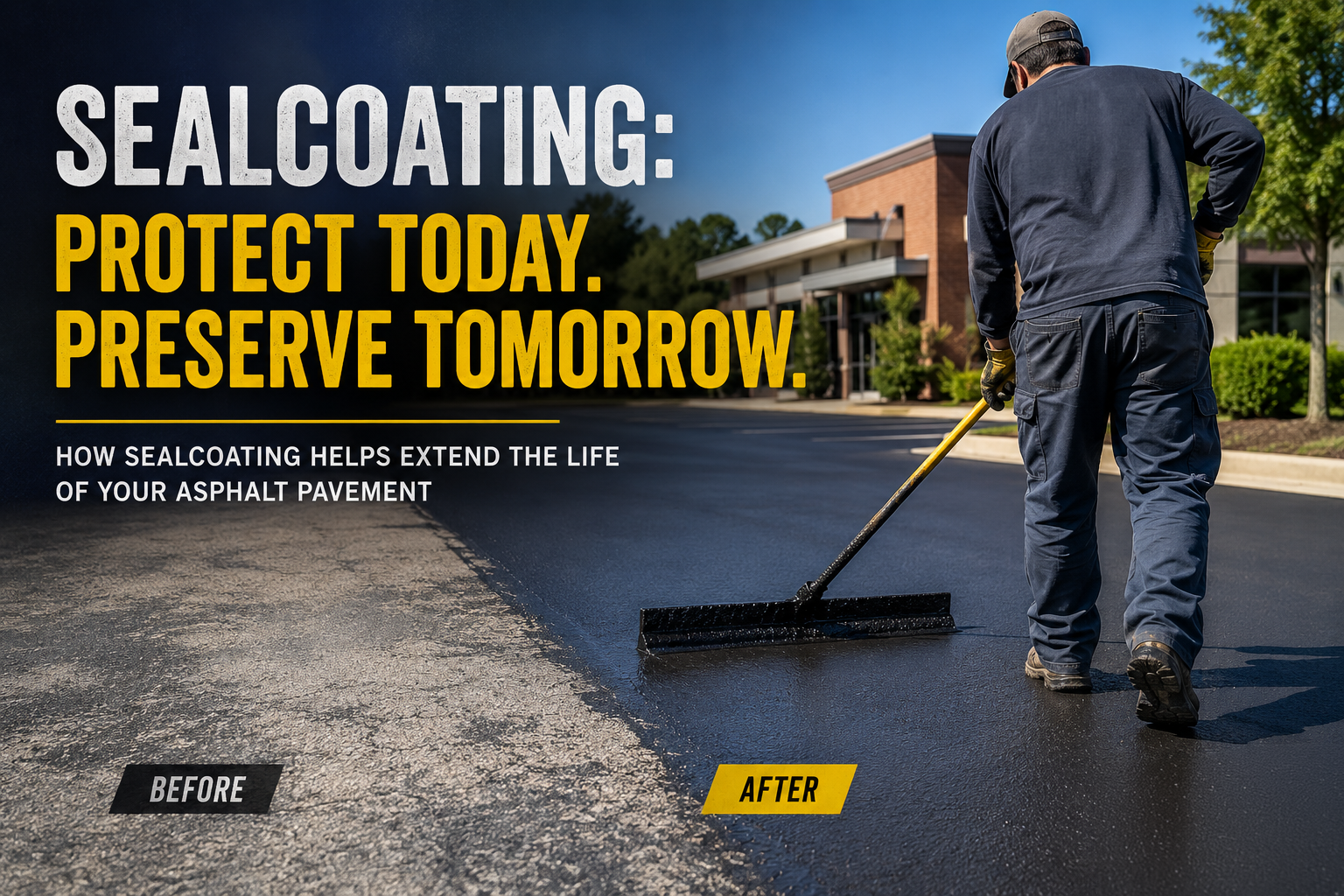
Sealcoating is the process of applying a protective coating over an existing asphalt surface.
Think of your asphalt as the investment and sealcoating as one of the ways you help protect it.
As asphalt is exposed to sunlight, water, traffic and other elements, the surface gradually begins to deteriorate. Sealcoating creates a protective barrier over the pavement that helps reduce its exposure to some of those damaging conditions.
And yes, it also makes faded asphalt look dark, clean and refreshed.
But sealcoating isn't just about making a parking lot or driveway look new again. Its real purpose is protection.
What Are the Benefits of Sealcoating Asphalt?
A properly maintained asphalt surface can provide years of service, and sealcoating can play an important role in that maintenance.
It Helps Protect Against Sun and Oxidation
The Mississippi sun isn't particularly gentle on anything, including asphalt.
Exposure to sunlight and oxygen contributes to oxidation, which can cause asphalt to become dry, faded and more brittle over time. As the pavement loses flexibility, it can become increasingly susceptible to cracking and surface deterioration.
Sealcoating provides an additional layer between the asphalt surface and the elements, helping slow that process.
It Helps Protect Against Water
Water is one of asphalt's biggest enemies.
Once water finds its way through cracks or damaged areas in pavement, it can reach the layers underneath. Over time, that can contribute to weakening, erosion and more serious pavement problems.
Sealcoating helps reduce water penetration through the pavement surface. However, existing cracks and damaged areas may need to be addressed before the sealcoat is applied.
It Provides Protection From Everyday Spills
Parking lots, roads and driveways don't exactly live clean lives.
Vehicles can leak oil, fuel and other automotive fluids onto the pavement. Sealcoating provides an additional protective surface that can help limit direct exposure of the asphalt to these contaminants.
It Keeps Asphalt Looking Better
There's also no denying the visual difference.
Older asphalt tends to fade from rich black to dull gray as it ages. Sealcoating restores a darker, more uniform appearance that can make an entire property look cleaner and better maintained.
For businesses, churches, schools, apartment complexes and other commercial properties, that fresh appearance can make a noticeable difference in curb appeal.
Sealcoating vs. Asphalt Paving: What's the Difference?
This is where things sometimes get confusing. Sealcoating protects asphalt that is already there. Asphalt paving creates or replaces the pavement itself.
Sealcoating does not rebuild a failing asphalt surface. It won't repair a failed base, eliminate major potholes or magically make severe cracking disappear.
If the asphalt is still structurally sound and primarily showing signs of surface aging and wear, maintenance such as sealcoating may be appropriate.
If the pavement is severely damaged, breaking apart, holding water because of structural problems or experiencing widespread failure, repairs or repaving may be the better investment.
That's why evaluating the condition of the pavement comes first.
When Should You Sealcoat Instead of Repave?
Sealcoating makes the most sense when the asphalt underneath still has plenty of useful life left.
Your pavement may be a candidate for sealcoating if:
- The surface has begun fading from black to gray.
- The pavement is showing normal surface wear.
- There are only minor cracks or isolated areas that can be repaired.
- The asphalt remains generally smooth and structurally sound.
- You want to protect existing pavement before deterioration becomes more serious.
- You want to refresh the appearance of a driveway, road or parking lot.
The goal is preventive maintenance, not waiting until the pavement has already failed.
When Is Sealcoating NOT Enough?
This part is important.
Sealcoating isn't a cure-all for damaged asphalt.
Putting sealcoat over serious pavement problems may improve its appearance temporarily, but it doesn't fix what's happening underneath.
Your pavement may need repairs or repaving instead if you're seeing significant problems such as large potholes, extensive cracking, crumbling pavement, major depressions, drainage issues or areas where the asphalt or underlying base has failed.
It's a little like putting a fresh coat of paint on a rotten board. It may look better for a while, but the underlying problem is still there.
Good asphalt maintenance means using the right solution at the right time.
Why Would You Pave AND Sealcoat?
Because they're two different parts of taking care of your pavement.
New asphalt gives you the surface.
Sealcoating helps you maintain it.
After asphalt is installed and has had the appropriate time to cure, sealcoating can become part of a long-term pavement maintenance plan. Rather than waiting for visible deterioration to become severe, routine maintenance can help protect the investment you've already made.
That doesn't mean freshly paved asphalt should immediately be sealcoated. New asphalt needs time to cure before a sealcoat should be considered, and the appropriate timing can depend on the pavement, conditions and materials involved.
Once the pavement is ready, however, periodic sealcoating can be one part of keeping it in better condition over the years.
How Often Should Asphalt Be Sealcoated?
There isn't one perfect schedule for every driveway, road or parking lot.
How frequently sealcoating is appropriate depends on several factors, including:
- Age and condition of the asphalt
- Amount and type of traffic
- Sun exposure
- Weather
- Drainage
- Previous maintenance
- Oil or chemical exposure
- Type of property and pavement use
A residential driveway doesn't experience the same punishment as a busy commercial parking lot full of cars every day. Likewise, pavement exposed to full Mississippi sun may age differently from a shaded surface.
Instead of sealcoating simply because a certain number of years have passed, the condition of the asphalt should help determine when maintenance is needed.
What Happens During the Sealcoating Process?
A good sealcoat starts long before the coating itself goes down.
1. Inspect the Pavement
First, the asphalt needs to be evaluated.
Are there cracks? Potholes? Drainage problems? Areas of structural failure?
This determines whether the pavement is ready for sealcoating or needs other work first.
2. Prepare the Surface
The pavement needs to be properly prepared so the sealcoat can bond with the asphalt.
That generally means removing dirt, loose material and debris from the surface and addressing areas that require additional preparation.
3. Address Necessary Repairs
Depending on the condition of the pavement, cracks or damaged areas may need attention before sealcoating.
Remember: sealcoat is a protective surface treatment, not a replacement for asphalt repair.
4. Apply the Sealcoat
Once the surface is ready, the sealcoat is applied across the asphalt to create a uniform protective layer.
5. Let It Cure
The freshly coated pavement needs adequate time to cure before vehicles are allowed back onto it. Weather, temperature, humidity and the product being used can all affect curing time.
Rushing this step can damage the new surface before it has a chance to properly set.
Is Sealcoating Right for My Driveway?
It certainly can be.
Residential driveways deal with many of the same conditions as larger paved surfaces: sunlight, rain, vehicle traffic, automotive fluids and age.
If your driveway is structurally sound but beginning to look faded or weathered, sealcoating may help protect the existing asphalt while giving your property a cleaner appearance.
If it's filled with potholes, severely cracked or breaking apart, however, it's time to look beyond sealcoating.
What About Parking Lots and Commercial Properties?
Sealcoating can be particularly valuable as part of a maintenance plan for commercial pavement.
Parking lots represent a significant investment, and they're constantly exposed to traffic, turning vehicles, parked cars, sunlight, rain and automotive fluids.
Maintaining that surface can help property owners get more value from the asphalt they already have while keeping the property looking cared for.
For commercial properties, sealcoating can also be coordinated with other maintenance work so the pavement is repaired, protected and ready for fresh pavement markings as needed.
Is Sealcoating Just Cosmetic?
No. That's probably the biggest misconception about it.
The fresh black appearance is certainly a benefit, but that's not the main reason to sealcoat.
Sealcoating is a pavement maintenance tool.
The goal is to help protect a good asphalt surface from conditions that contribute to deterioration, allowing you to maintain the pavement rather than simply waiting until it needs major repairs or replacement.
Fresh-looking asphalt is just a nice bonus.
Frequently Asked Questions About Sealcoating
Does sealcoating fix cracks?
Sealcoating itself isn't intended to repair significant cracks. Cracks and other damaged areas may need to be addressed separately before the sealcoat is applied.
Can you sealcoat brand-new asphalt?
New asphalt generally needs time to properly cure before sealcoating. Applying sealcoat too soon can interfere with that process, so the condition and age of the pavement should be evaluated first.
How long does sealcoating take to dry?
Curing time varies based on the sealcoat product, temperature, humidity, sunlight and other conditions. The pavement should remain closed to vehicle traffic until it has adequately cured.
Does sealcoating make asphalt last longer?
Sealcoating can help slow surface deterioration by providing additional protection against conditions such as UV exposure, oxidation, water and automotive fluids. It should be considered one part of a broader asphalt maintenance strategy rather than a guarantee against future damage.
Can a parking lot be too damaged to sealcoat?
Yes. If pavement has extensive cracking, potholes, structural failure or significant base problems, sealcoating alone won't solve those issues. Repairs or repaving may be necessary first.
Is sealcoating worth it?
If the existing asphalt is still in good condition, preventive maintenance can be considerably more practical than waiting for serious deterioration to occur.
The key is doing the right maintenance before the pavement reaches the point where maintenance alone can't save it.
Protect the Asphalt You've Already Paid For
Your asphalt doesn't have to be falling apart before you start thinking about it.
In fact, that's the point.
Sealcoating is about taking care of good pavement while it's still good, helping protect it from the Mississippi sun, rain, traffic and everyday wear before those conditions have more opportunity to take their toll.
And if you aren't sure whether your driveway, road or parking lot needs sealcoating, repairs or new asphalt, you don't have to diagnose it yourself.
Warren & Warren Asphalt Paving can take a look at what you've got and help determine what it actually needs.
No unnecessary work. No one-size-fits-all answer.
Just the right solution for the asphalt in front of us.